
The Pontius Pilate Coin
The Coins of Pontius Pilate: The Governor Who Judged Jesus
The Gospels unanimously present Pontius Pilate as the Roman prefect who presided over the trial of Jesus and authorized His crucifixion (Matthew 27; Mark 15; Luke 23; John 18–19). For decades, some critics questioned whether Pilate was a historical figure of the stature described. The discovery of the “Pilate Stone” inscription at Caesarea in 1961 confirmed his title and office. Equally important are the bronze coins he issued.
What is the Pontius Pilate Coin: Historical Background
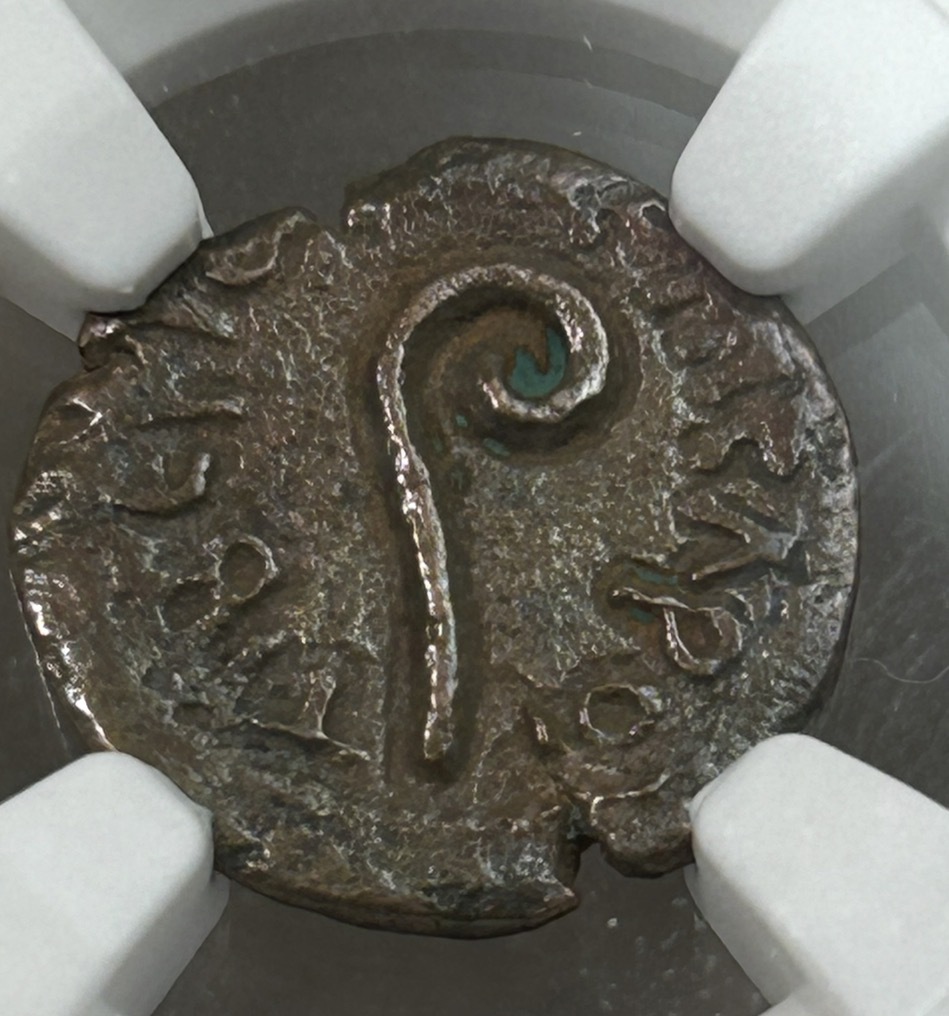
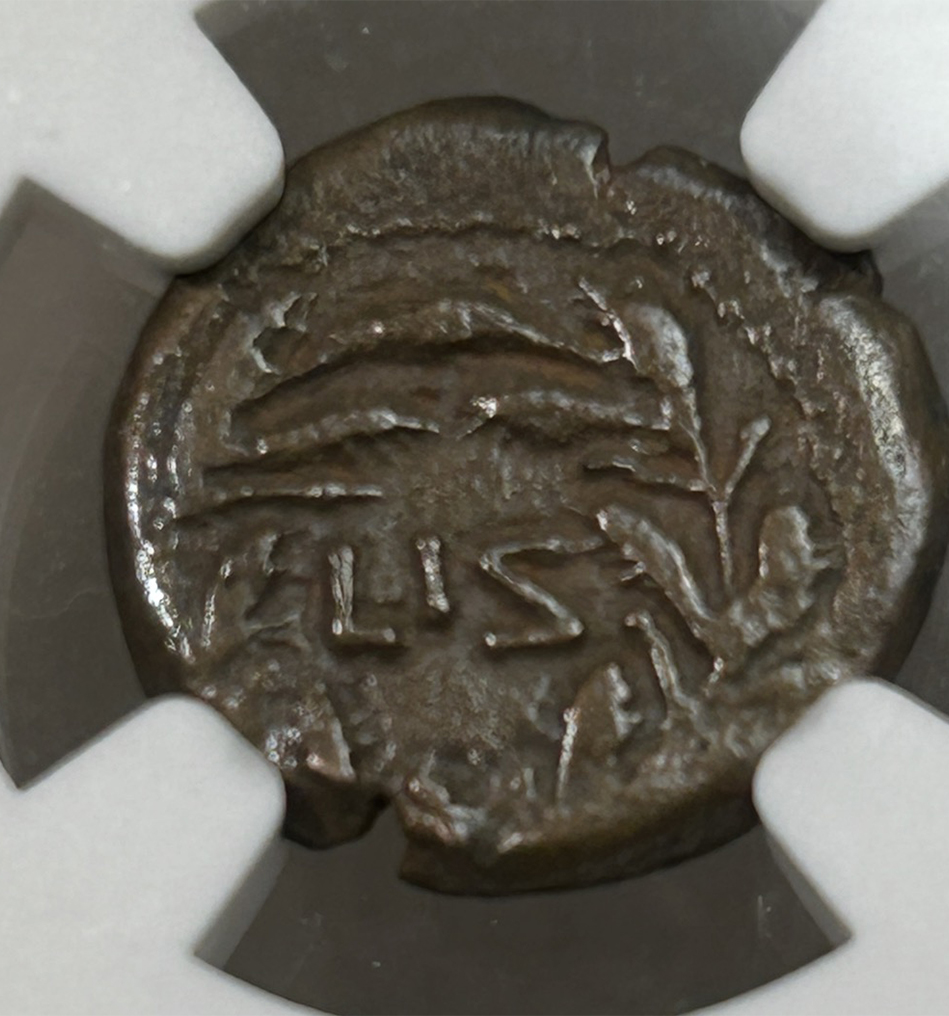
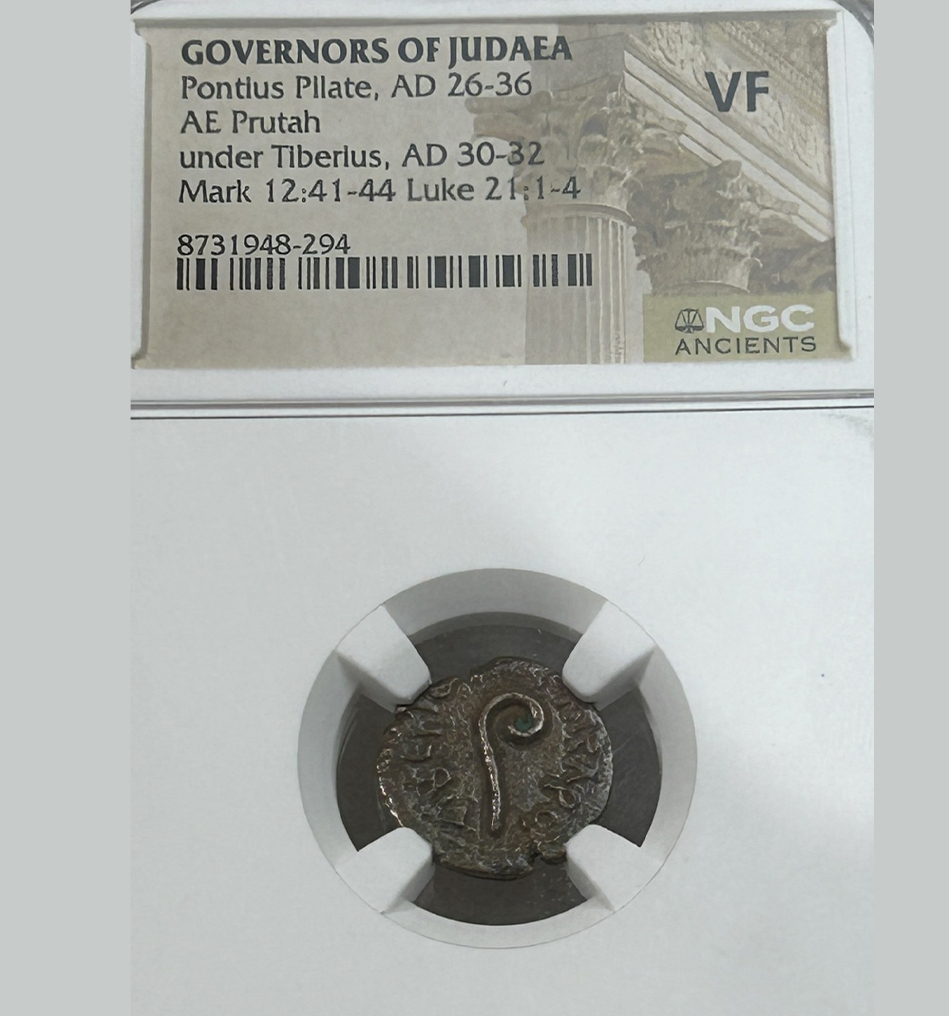
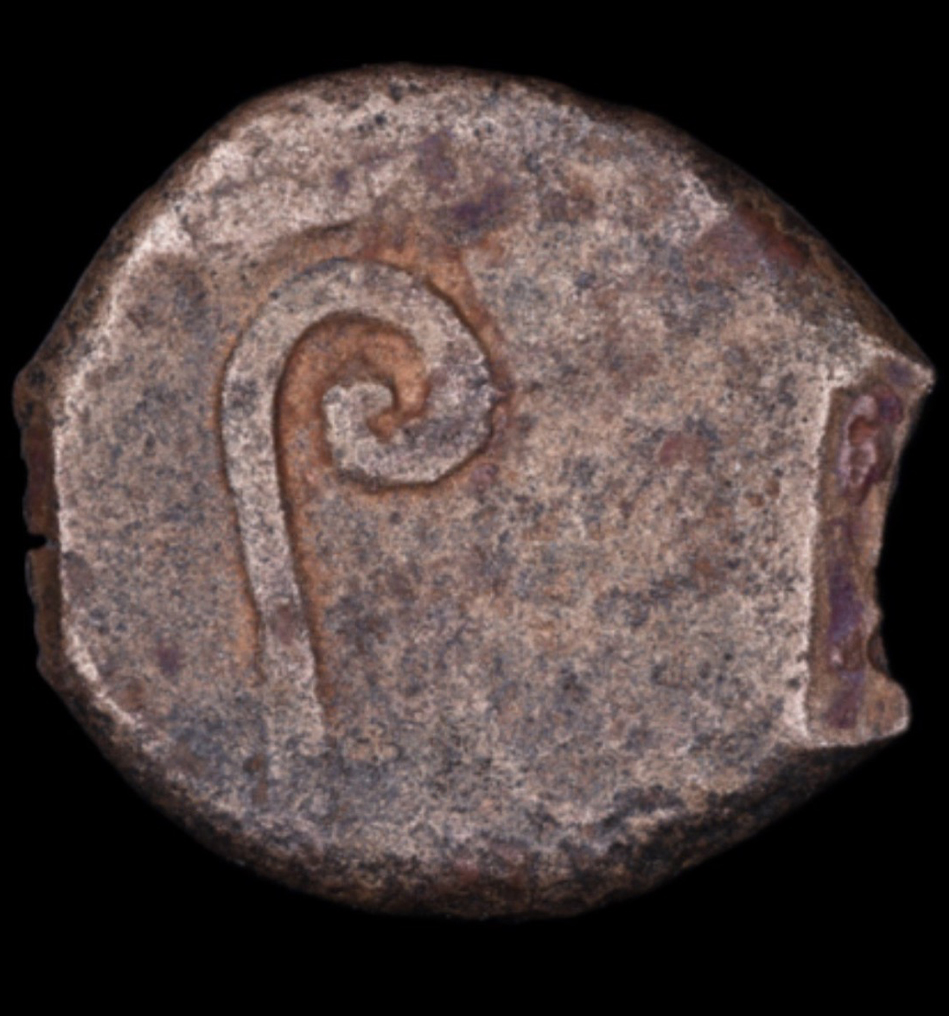
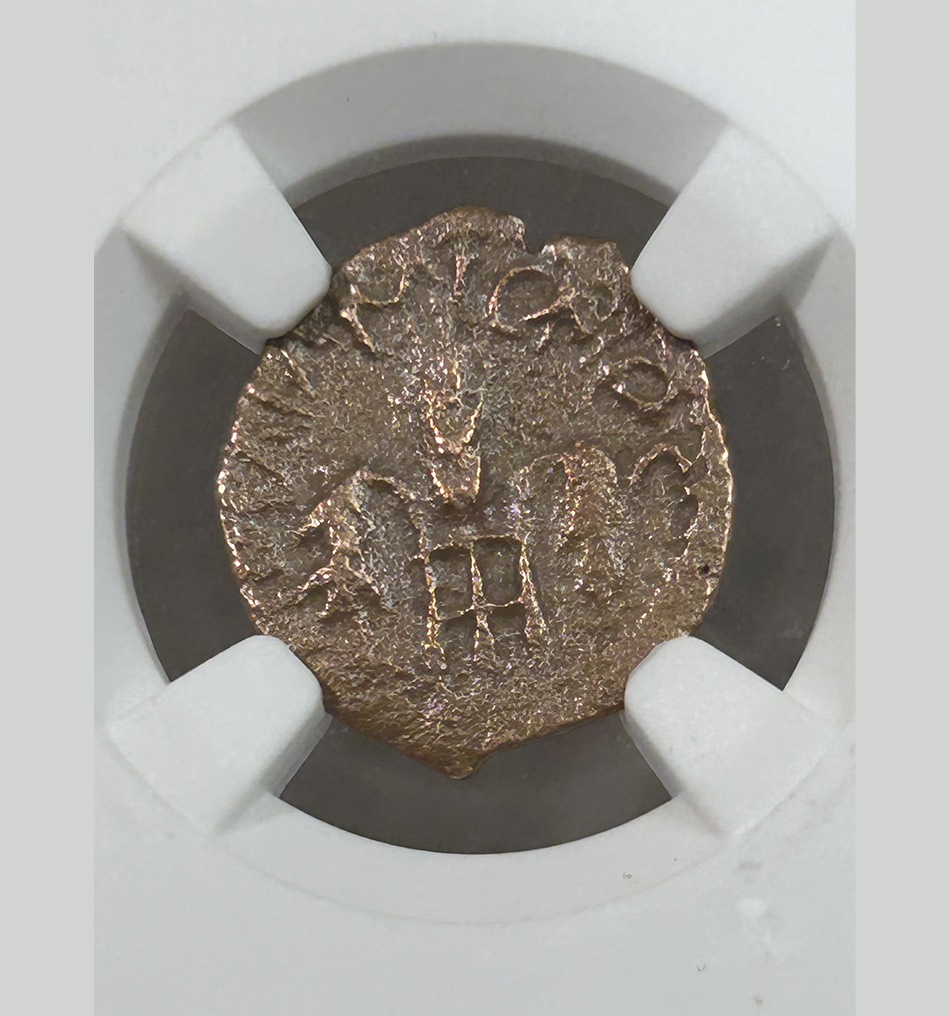
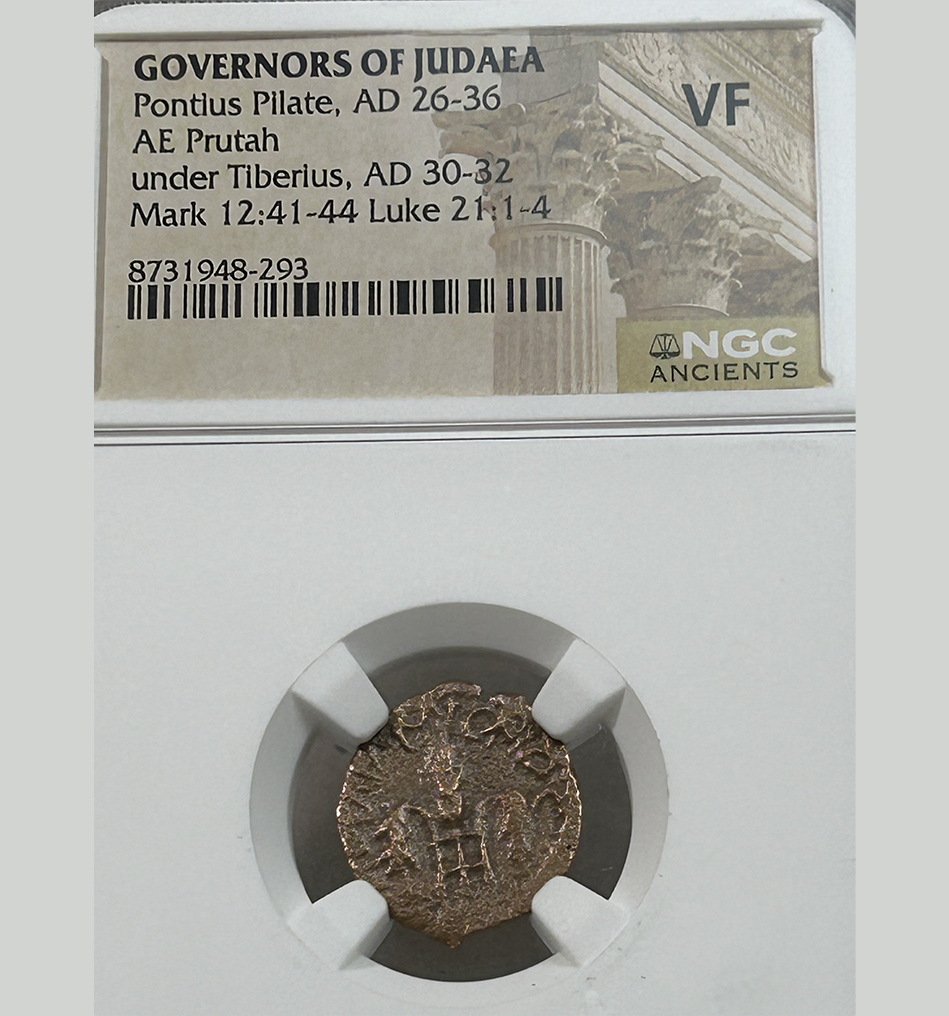
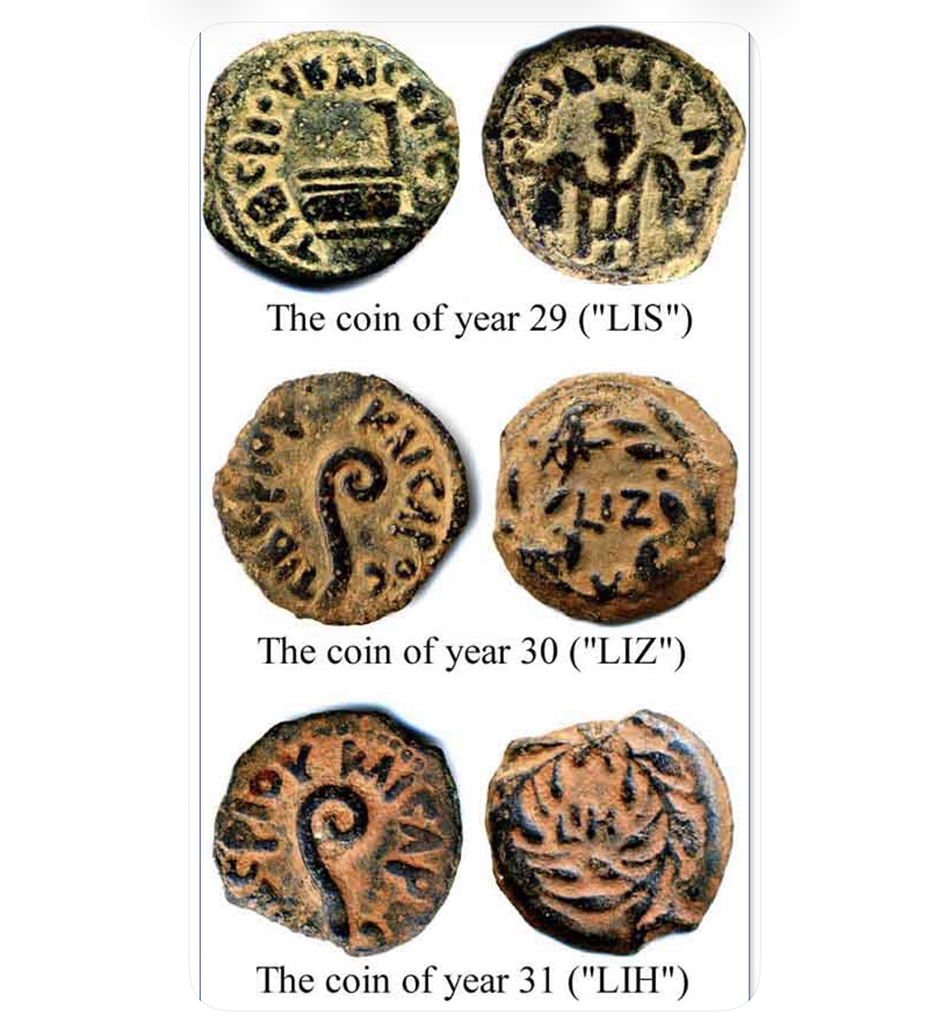
Between AD 29 and 31, Pilate minted small bronze prutot in Judea. These coins typically measure 15–18 mm and feature designs carefully chosen to assert Roman authority. Common types include a lituus (augur’s staff) or a simpulum (libation ladle), often accompanied by the date in Greek letters corresponding to the regnal years of Tiberius (for example, LIZ = year 17 of Tiberius = AD 30/31). The reverse frequently shows a wreath or simple plant motif.
These coins provide direct archaeological evidence that a Roman official named Pilate exercised minting authority in Judea during the precise window of Jesus’ ministry and death. Their presence in stratified excavations across the region confirms the administrative and economic reality presupposed by the Passion narratives. The Gospels’ portrayal of a prefect navigating political pressure from both Rome and the local leadership aligns with the historical footprint left by these modest bronze issues.
Owning or studying a genuine Pilate prutah connects the believer to the courtroom of history. The same governor who washed his hands and delivered Jesus to be crucified left behind these small, dated pieces of metal. The coin does not prove every theological claim of the New Testament, but it firmly anchors the central human characters and political structures of the crucifixion story in verifiable history. Faith is reinforced when the names and titles in Scripture match the objects recovered from the soil of the land where the events occurred. The Pilate coin stands as a quiet but powerful witness that the trial of Jesus took place under a real Roman administration in a real province at a real moment in time.
The Biblical Account
Matthew 27
Pontius Pilate presided over the trial of Jesus and ultimately authorized His crucifixion despite finding no fault deserving death.
John 18–19
John’s Gospel provides detailed insight into Pilate’s interactions with Jesus and the difficult political pressures he faced during the trial.
Pilate remains one of the most historically documented individuals mentioned in the New Testament.
Coin Specifications
Typical Characteristics
Material:
Region:
Ruler:
Governor:
Period:
Approximate Diameter:
Weight:
Biblical Reference:
Common Types:
Date Formula:
Explore More Coins from the Bible
Frequently Asked Questions About the Pontius Pilate Coin
Who was Pontius Pilate?
Did Pontius Pilate issue coins?
What do the symbols (lituus and simpulum) mean?
The most common types feature a lituus (the curved staff used by Roman augurs) or a simpulum (a ladle used for pouring libations in Roman religious ceremonies). The reverse often shows a wreath or a simple plant motif, along with the date written in Greek letters corresponding to the regnal years of Tiberius (for example, LIZ = year 17 of Tiberius = AD 30/31). These symbols deliberately projected Roman religious and political authority in Judea.