
Render Unto Caesar
The Tribute Penny: Render Unto Caesar
When religious leaders attempted to trap Jesus on the question of paying taxes to Rome (Matthew 22:15–22; Mark 12:13–17; Luke 20:20–26), He asked them to show Him the coin used for the tax. They produced a denarius. Jesus asked whose image and inscription it bore. “Caesar’s,” they replied. His answer—“Render to Caesar the things that are Caesar’s, and to God the things that are God’s”—has echoed for two millennia.
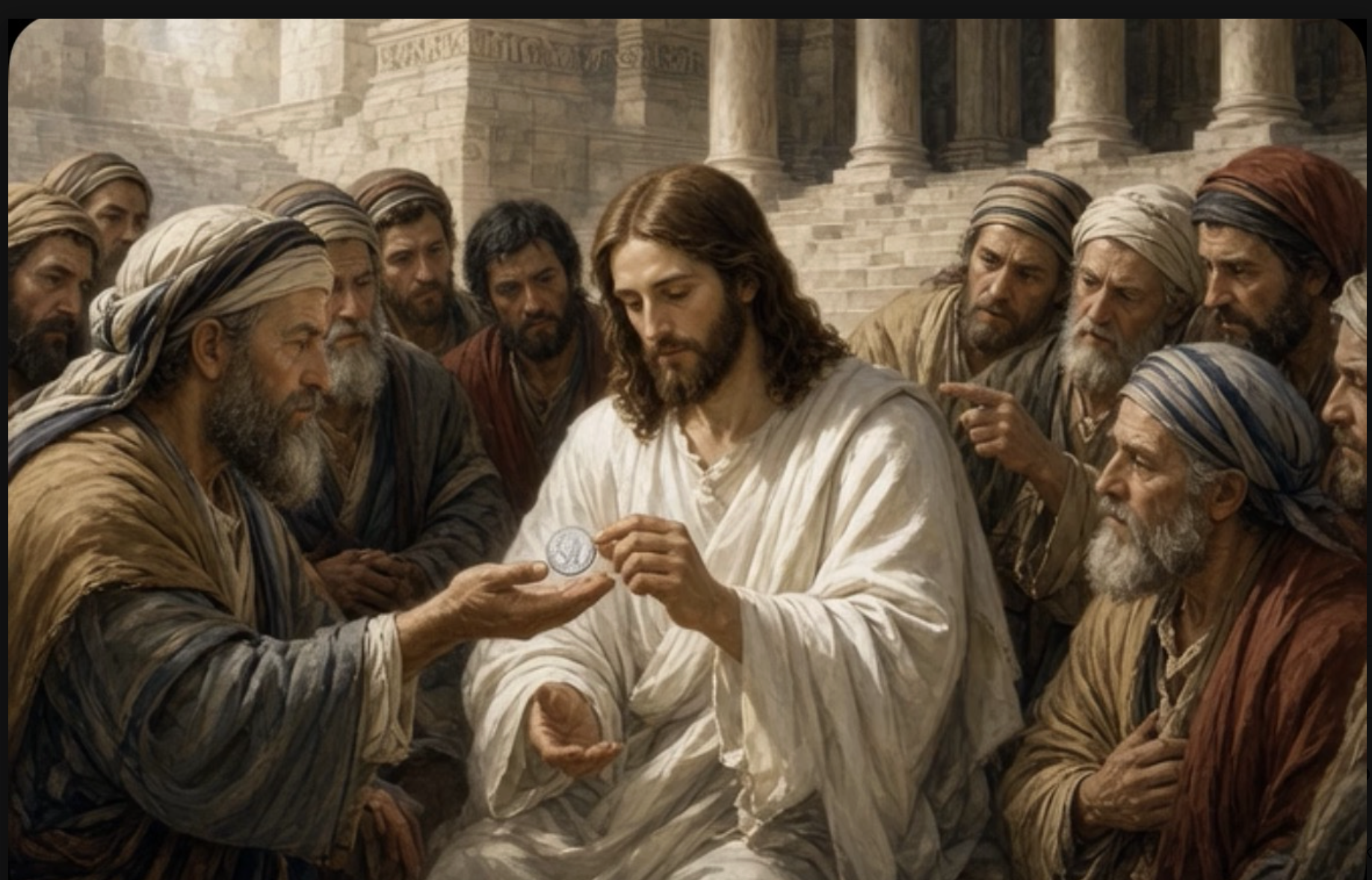
What Is the Render Unto Caesar Coin: Historical Background
The coin in view is a silver denarius of Emperor Tiberius (AD 14–37), the ruler during Jesus’ public ministry. These coins typically show the laureate head of Tiberius on the obverse with the legend “TI CAESAR DIVI AVG F AVGVSTVS” and, on the reverse, a seated female figure (often identified as Livia as Pax). Diameter is roughly 18–20 mm and weight about 3-4 grams. As the standard silver denomination of the empire, the denarius was the accepted medium for the Roman poll tax in Judea.
The presence of these coins in first-century Judea is archaeologically well-attested. Roman silver circulated alongside local bronze issues, and the Gospels accurately reflect both the political reality of Roman taxation and the sensitive religious issue of handling an object bearing the emperor’s image and divine titles. Jesus’ interlocutors could produce the coin on the spot, confirming that such currency was readily available in Jerusalem. The episode presupposes a mixed monetary economy under direct Roman administration.
Studying an authentic Tiberius denarius strengthens confidence in the historical reliability of the Gospels. The coin is not a prop invented for the story; it is a product of the same imperial system that governed Judea. The image of Caesar on the silver piece makes Jesus’ distinction between earthly and divine authority concrete. Faith is built when believers realize that the political and economic pressures described in Scripture match the material evidence recovered from the ground. The coin becomes a silent witness that the New Testament writers recorded real confrontations in a real occupied territory.
The Biblical Account
Matthew 22:15–22
Religious leaders attempted to trap Jesus by asking whether it was lawful to pay taxes to Caesar. Jesus requested a coin and asked whose image and inscription appeared on it.
When they answered, “Caesar’s,” Jesus replied:
“Render therefore unto Caesar the things which are Caesar’s; and unto God the things that are God’s.”
His response demonstrated wisdom, avoiding their trap while teaching an important lesson about earthly and divine authority.
Mark 12:13–17 & Luke 20:20–26
Both Mark and Luke record the same event, emphasizing the tension between Roman rule and Jewish society. The coin itself became a visual object lesson illustrating responsibility, citizenship, and devotion to God.