
Judas’ Silver
The Shekel of Tyre: Thirty Pieces of Silver
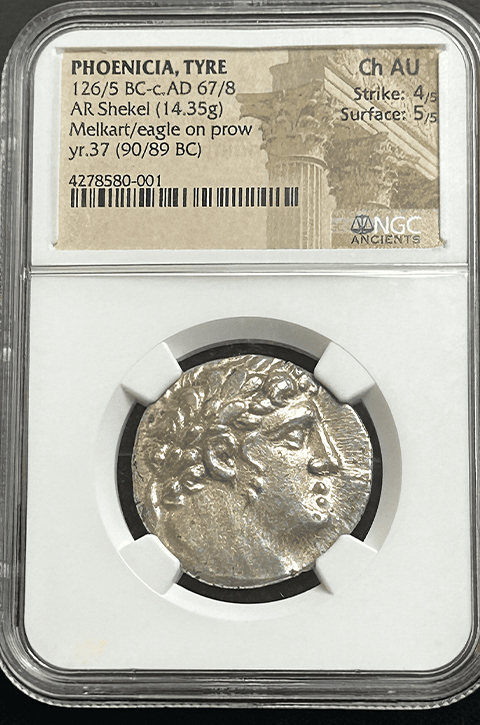
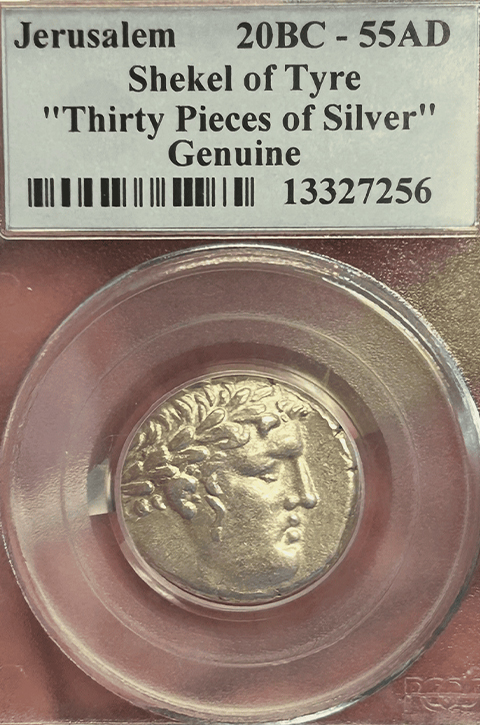
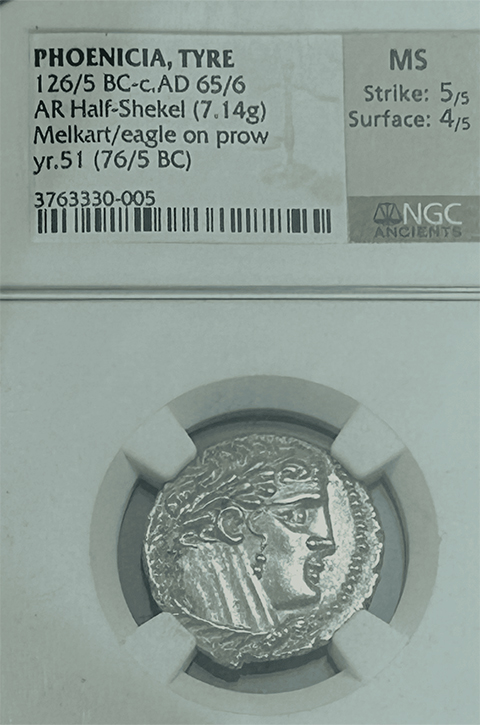
Matthew 26:14–16 records that Judas Iscariot agreed to betray Jesus for thirty pieces of silver. After the betrayal, filled with remorse, he returned the money (Matthew 27:3–10), which the chief priests used to buy the potter’s field. The most widely accepted identification of these coins is the silver shekel (or half-shekel) of Tyre.
What is Judas’ Silver: Historical Background
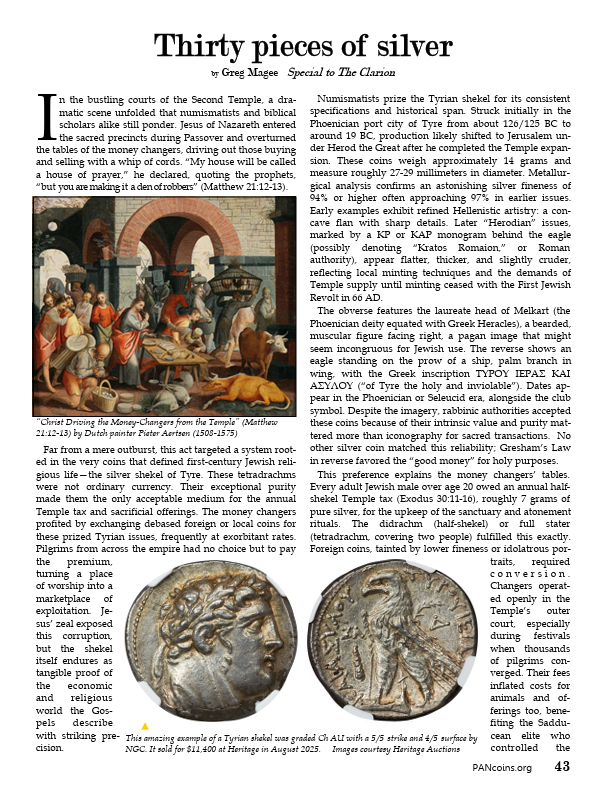
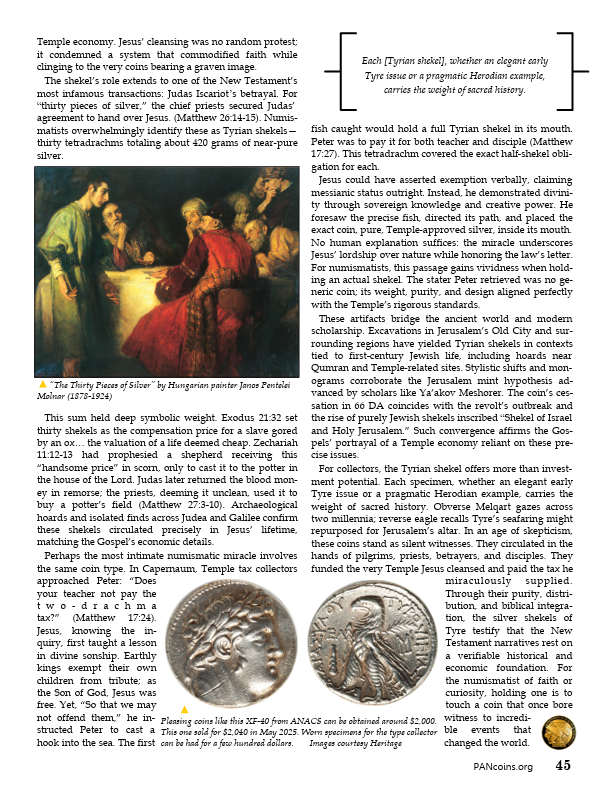
Struck from approximately 126 BC until the First Jewish Revolt, Tyrian shekels were renowned for their high silver purity, often 90–97 percent and consistent weight of about 14 grams. The obverse typically features the head of the Tyrian god Melqart (equated with Heracles), and the reverse shows an eagle standing on a prow. Despite the pagan imagery, these coins were the required currency for the annual Temple tax (Exodus 30:13) because of their reliable precious-metal content. After the Romans closed the Tyre mint around 18 BC, production of the same type appears to have continued, possibly in or near Jerusalem, until the revolt.
This identification fits the biblical narrative with striking precision. Only high-purity silver would have been acceptable for sacred payments in the Temple. Roman provincial silver was generally of lower quality and therefore unsuitable. Hoards containing Tyrian shekels have been found in Judean contexts dating to the late Second Temple period, confirming their circulation in the exact time and place of the Passion narrative. The use of thirty such coins also echoes the valuation of a slave in Exodus 21:32 and the prophetic imagery of Zechariah 11:12–13, adding intertextual depth.
An authentic Shekel of Tyre is powerful evidence for the accuracy of Matthew’s account. It demonstrates that the Gospel writer understood the specific monetary requirements of the Temple system. The coin’s pagan design, yet sacred acceptance, illustrates a profound irony: the very currency that funded the betrayal of the Messiah was the same currency God had allowed to serve His house. Holding such a coin brings the events of Holy Week into sharp focus. Faith is strengthened by the realization that the price of betrayal was paid in a historically verifiable medium, and that even this dark transaction occurred within the larger framework of divine purpose and prophetic fulfillment
The Biblical Account
Matthew 26:14–16
Judas approached the chief priests and agreed to betray Jesus in exchange for thirty pieces of silver.
This payment fulfilled prophetic themes found in the Old Testament and set into motion the events leading to Jesus’ arrest.
Matthew 27:3–10
After realizing the consequences of his actions, Judas returned the silver to the religious leaders.
The coins were later used to purchase a field, fulfilling additional prophetic connections recorded in Scripture.