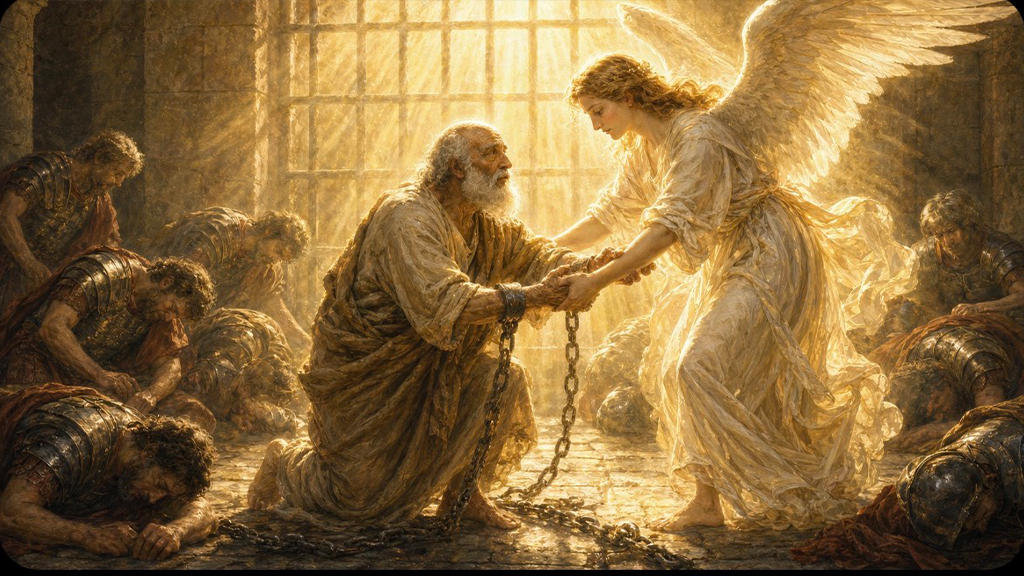
The night before the planned public appearance, Peter slept bound with two chains between two soldiers, with more guards at the door. An angel of the Lord stood beside him, a light shone in the cell, and the angel struck him and said, “Get up quickly.” The chains fell from his hands. Told to dress and follow, Peter did so, thinking he was seeing a vision. They passed the first and second guards. The iron gate leading into the city opened of its own accord. Once they had gone one street farther, the angel left him. Only then did Peter come to himself and know that the Lord had sent His angel and rescued him from Herod’s hand and from all that the Jewish people were expecting.
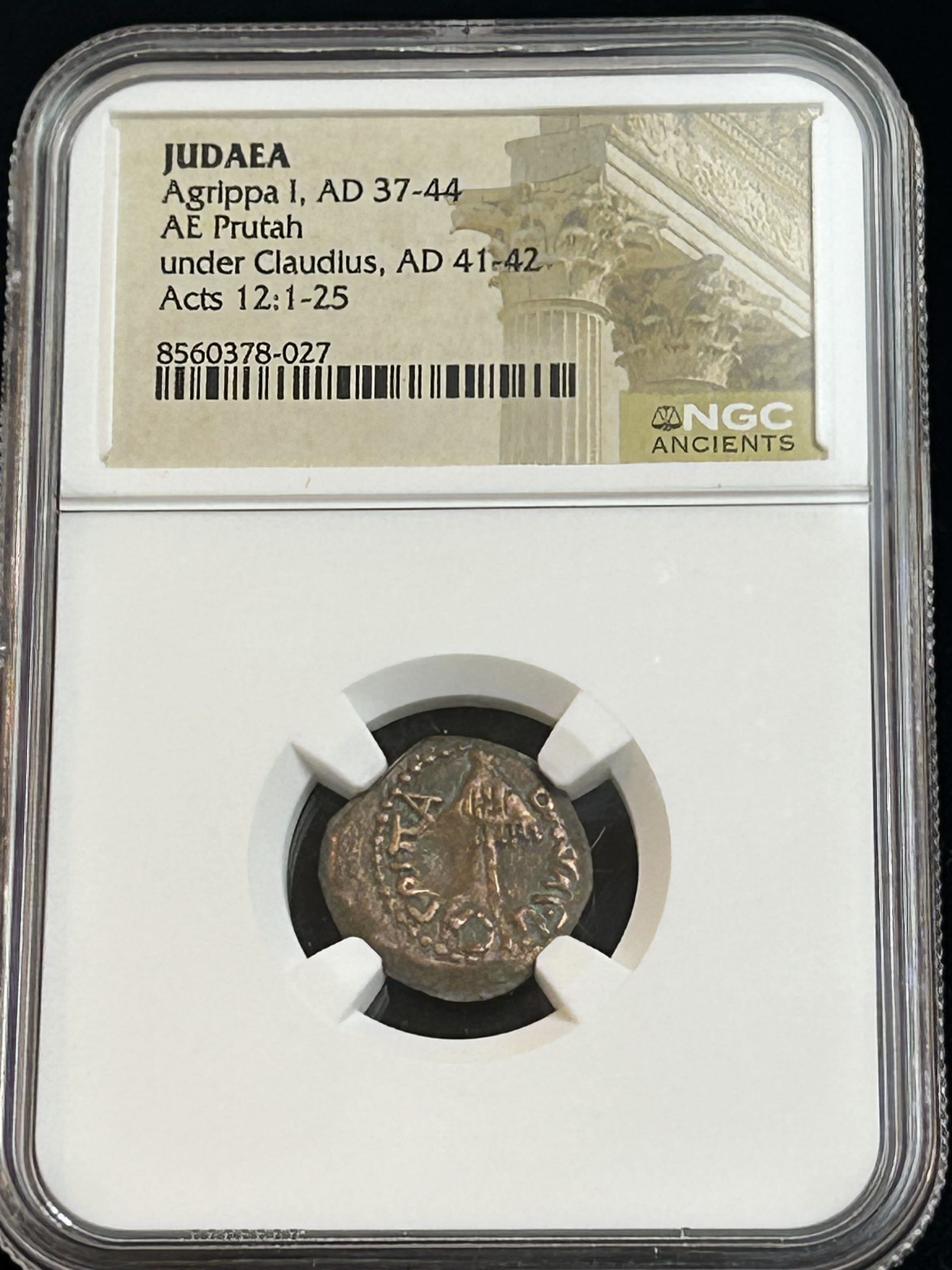
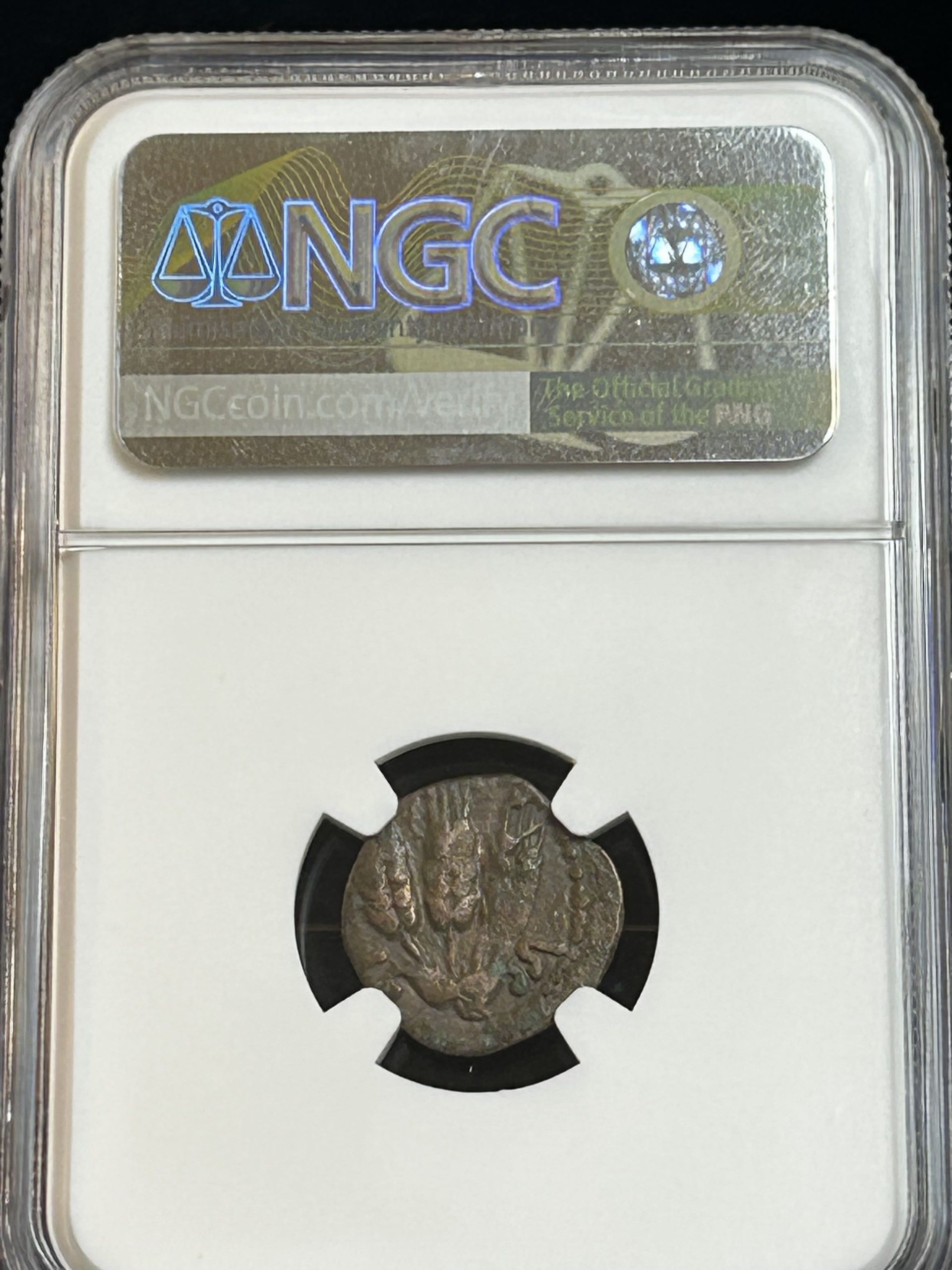
The same king who ordered that imprisonment issued a common bronze prutah in Jerusalem in Year 6 of his reign (AD 41/42). The coin shown here is that type: an AE prutah, about 16–18 mm, struck under Claudius. One side bears a fringed royal canopy—the sunshade carried over a king—with the Greek legend BACIΛEΩC AΓPIΠA, “of King Agrippa.” The other side shows three ears of barley between leaves, dated LϚ (Year 6). It is ordinary pocket change from the exact years Agrippa ruled the city where James died and Peter was chained.
The canopy proclaimed royal dignity. The barley spoke of the land’s produce. Neither image kept the prison shut. Agrippa’s small bronze remains a dated, physical witness that the events of Acts 12 took place in a real city, under a real king, at a documented moment in history.