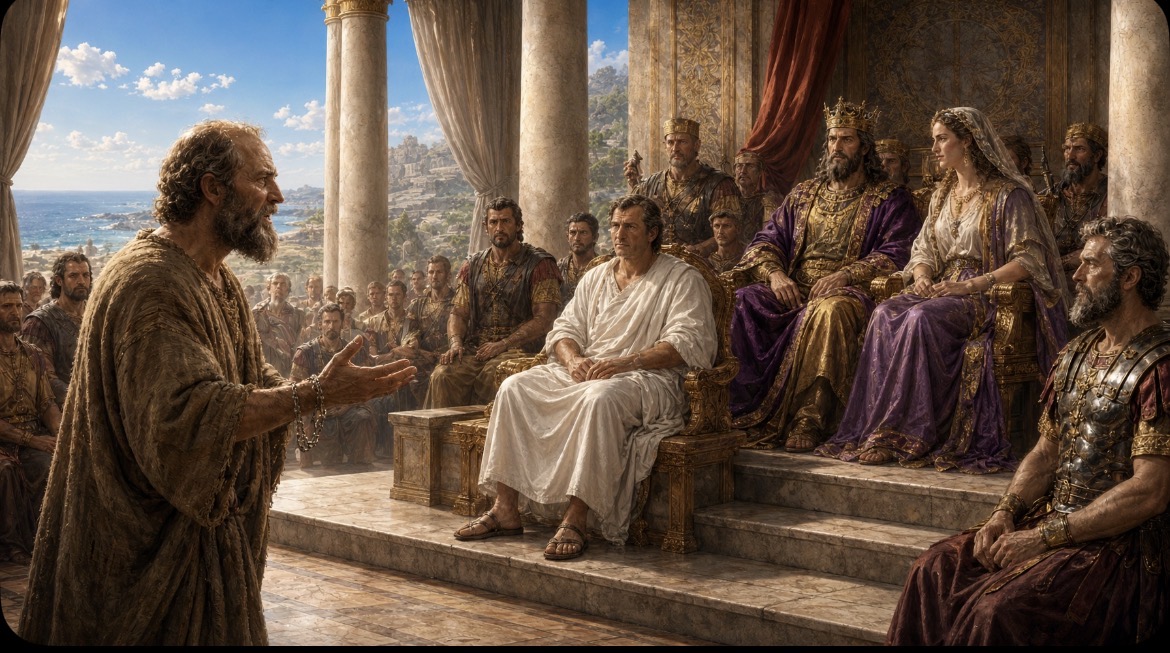
After two years of delay under Antonius Felix, Paul faced the newly arrived procurator Porcius Festus. The Jewish leadership pressed charges. Festus, wanting to do the Jews a favor, suggested a change of venue to Jerusalem. Paul, a Roman citizen, invoked his right of appeal: “I appeal to Caesar” (Acts 25:11). Festus conferred with his council and declared, “You have appealed to Caesar. To Caesar you shall go.” That Caesar was Nero. Luke names the officials, the sequence of their terms and even the political calculation behind Festus’s delay. Those are the marks of a first-rate historian writing close to the events.
Three coins now in collectors’ hands freeze those same names and dates in metal.
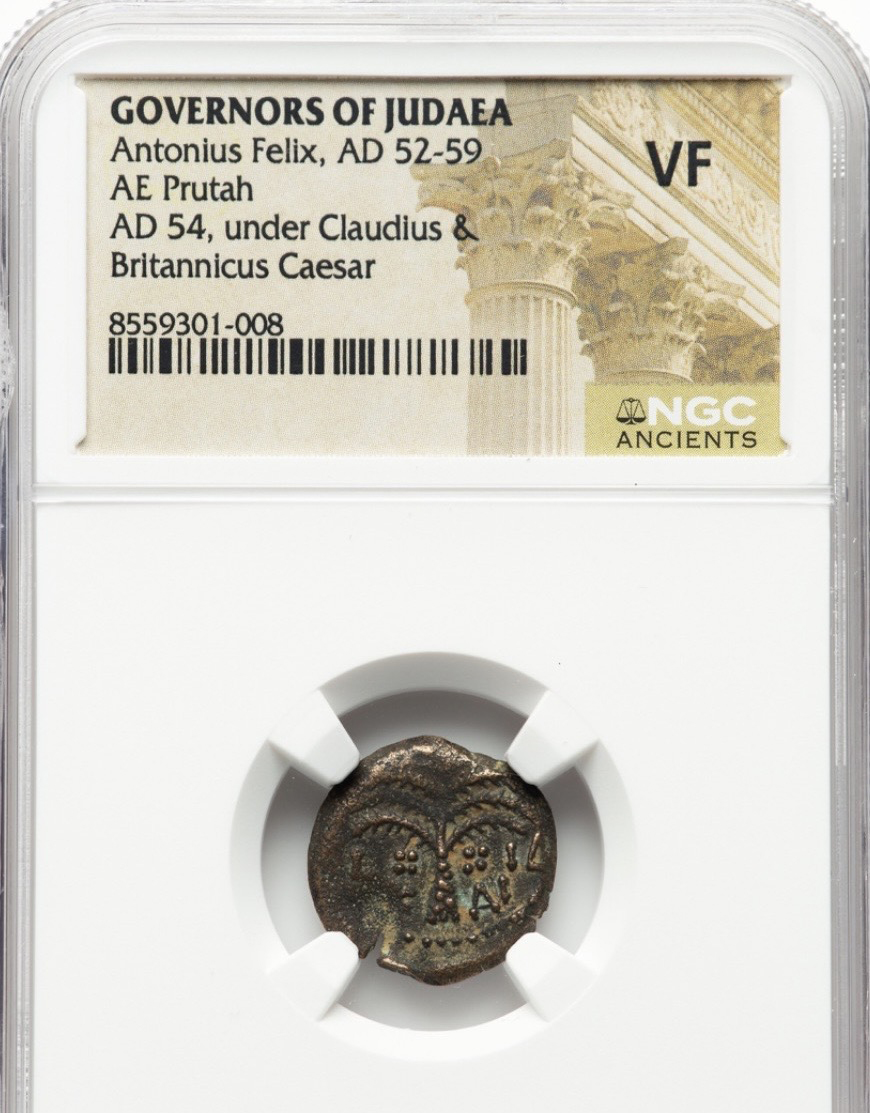
The first is a bronze prutah of Antonius Felix, struck in Jerusalem in AD 54 under Claudius and Britannicus Caesar. Its palm tree and date (year 14 of Claudius) match the slab that reads “Governors of Judaea, Antonius Felix, AD 52-59.” Felix is the governor who heard Paul, hoped for a bribe, and left him in custody when recalled (Acts 24).
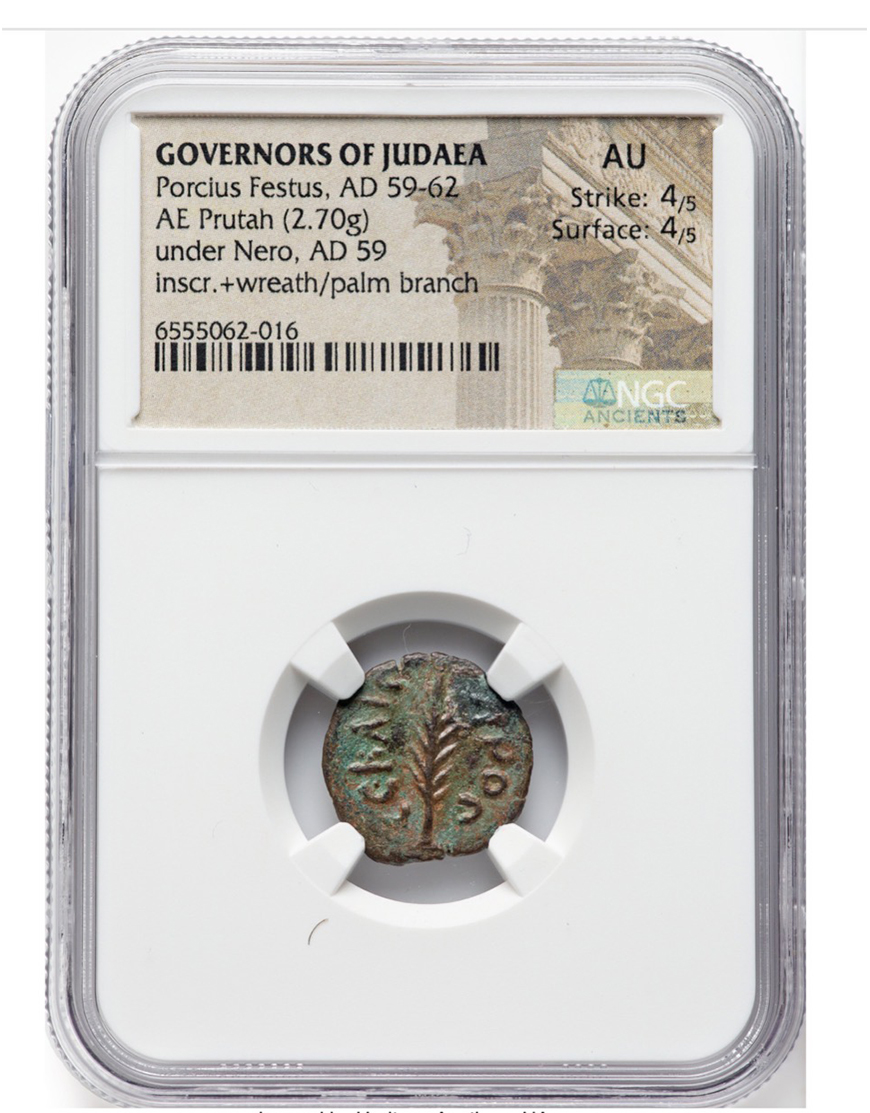
The second is a prutah of Porcius Festus, 2.70 grams, NGC AU, dated year 5 of Nero (AD 58/59). The wreath enclosing NEPWNOC and the upright palm branch are the standard type for Festus’s brief tenure (AD 59–62). This is the man who succeeded Felix and granted Paul’s appeal.
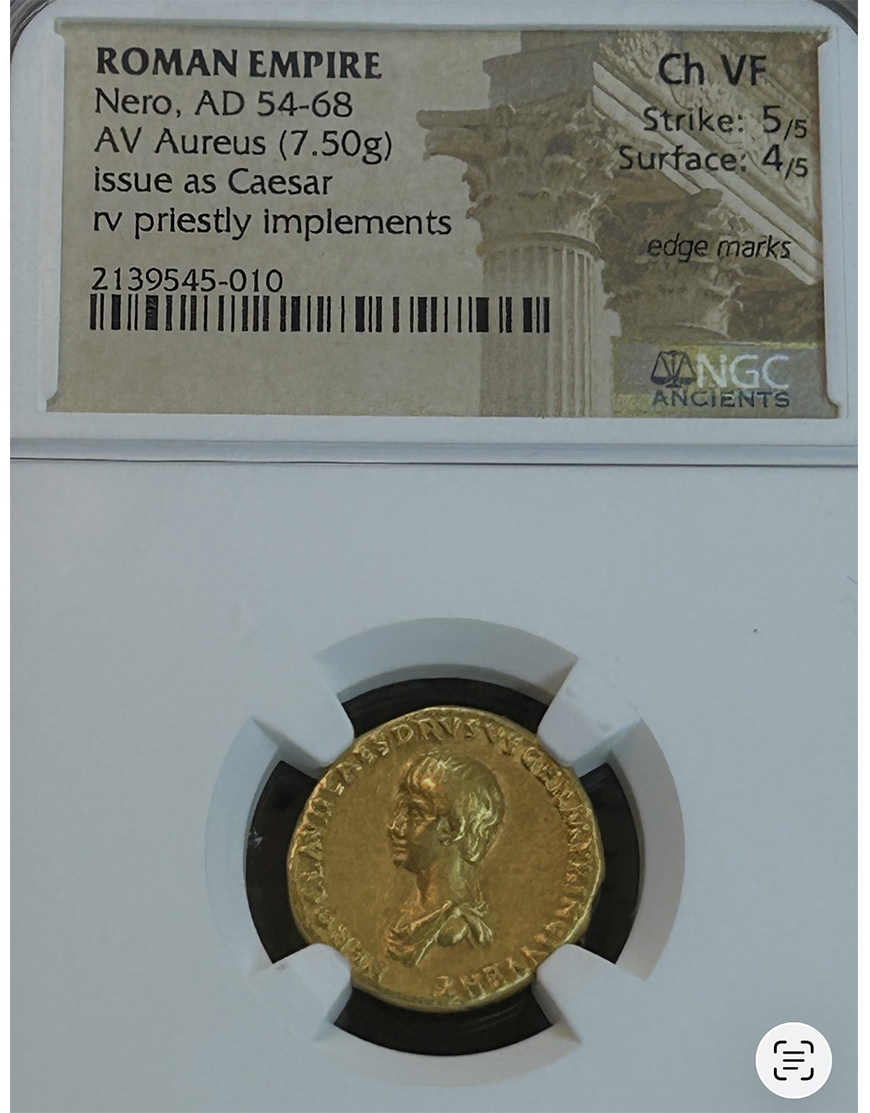
The third is a gold aureus of Nero. 7.50 grams, reverse of priestly implements (simpulum, lituus, tripod, patera). The youthful portrait and the title “issue as Caesar” place it before Nero’s accession in October AD 54, the very emperor to whom Paul appealed and before whom he would eventually stand.
These small bronzes and the gold piece were circulating in Judaea and the empire while the events of Acts 24–26 were unfolding. They independently confirm that Luke got the names, titles, order of office, and political reality exactly right. The same Spirit who promised words before governors also preserved the historical details so that later generations could hold the evidence in their hands.