King Herod and the Wisemen
That question struck at the one claim Herod had spent his life securing. He was not born a king. His father Antipater was an Idumean, an Edomite whose people had been brought under Jewish law a generation earlier. His mother was Nabataean. In 40 BC the Roman Senate, at the urging of Mark Antony, declared Herod “King of the Jews.” He took Jerusalem by force in 37 BC, ending Hasmonean rule. To cloak the throne in dynastic blood he married the Hasmonean princess Mariamne. Then he destroyed the very family that gave him legitimacy: Mariamne was executed in 29 BC; her sons Alexander and Aristobulus in 7 BC; his firstborn Antipater five days before Herod’s own death in 4 BC. Augustus was said to remark that it was safer to be Herod’s pig than his son.
By the time the Magi came, Herod was old, ill, and already killing heirs. “Born king of the Jews” was language he could not tolerate. He had been appointed king. A child announced by a star and sought by eastern envoys, men from the Parthian world that had once driven him from Jerusalem, was a rival of a different order. He summoned the chief priests, learned that Messiah was expected in Bethlehem, and sent the Magi as unwitting scouts, asking them to report back “that I too may come and worship him” (Matthew 2:8).
Warned in a dream, they went home another way. Joseph fled with Mary and the child to Egypt. Herod, “when he saw that he had been tricked,” ordered the boys of Bethlehem two years old and under put to death (Matthew 2:16). The massacre is recorded only in Matthew, yet it fits the king Josephus knew: a builder of temples and harbors who would rather empty a cradle than risk a crown. This prutah, circulating in those same years, is the coin of that throne.
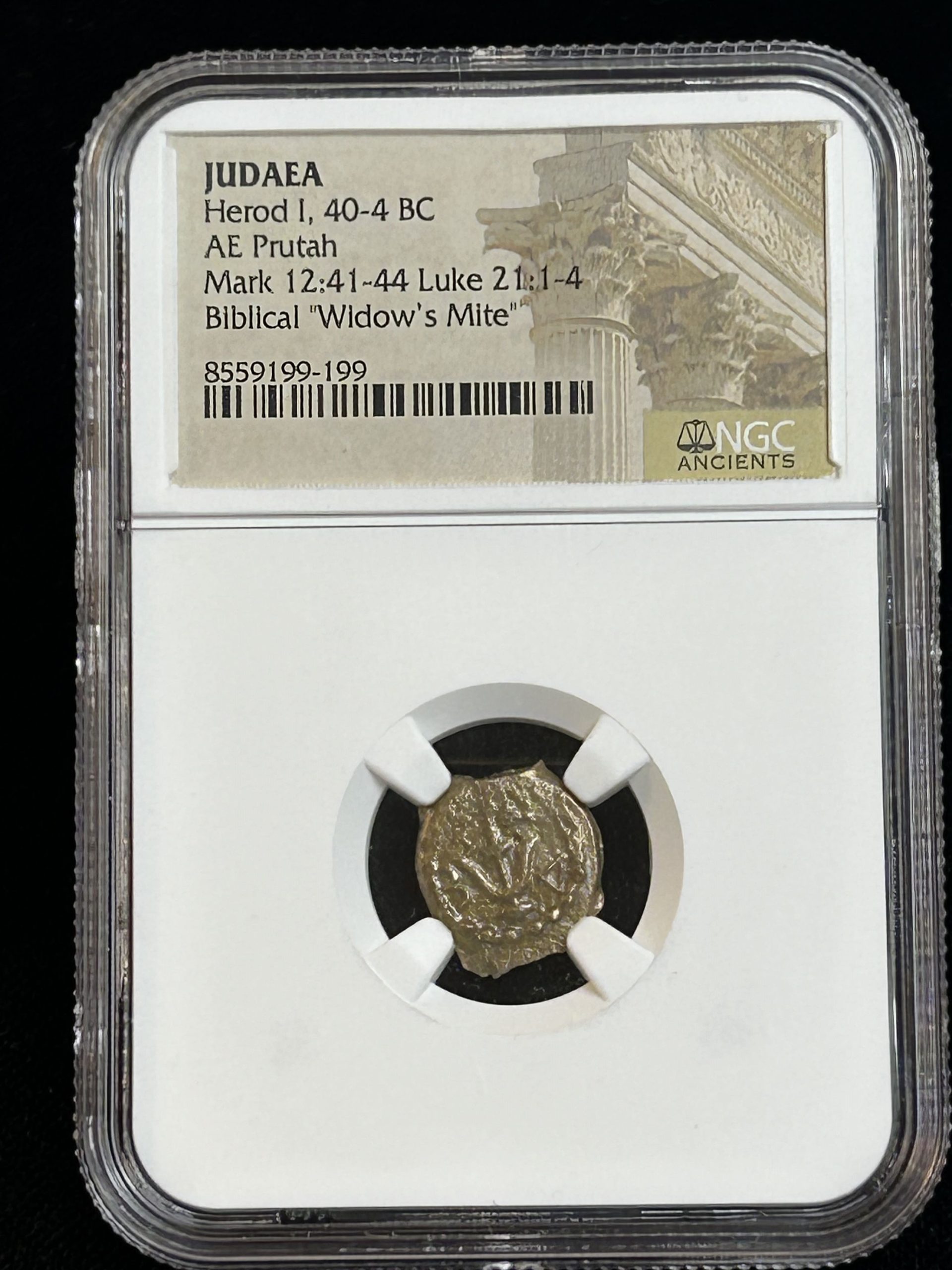
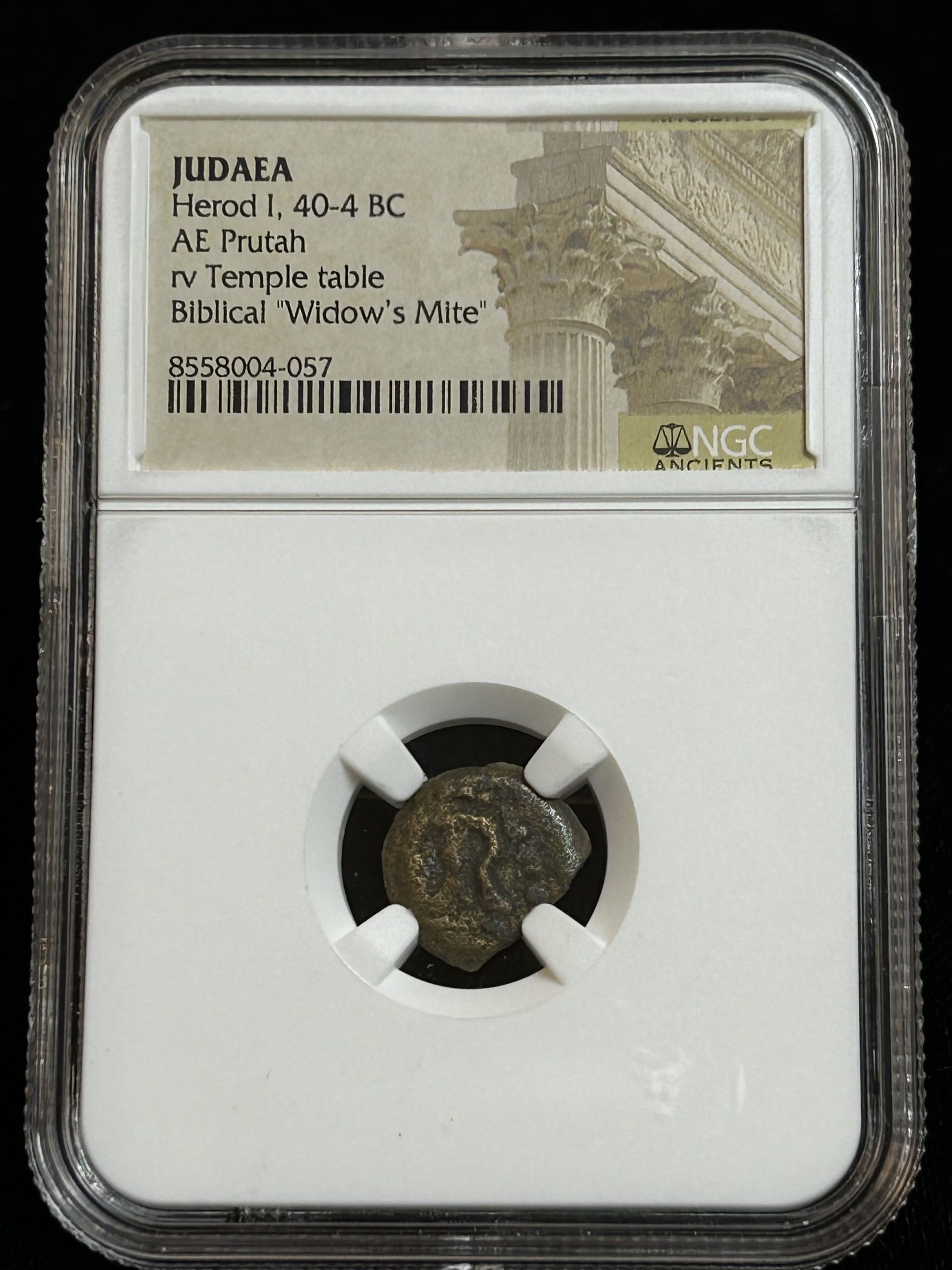
Matthew 2: 1-2
“After Jesus was born in Bethlehem in Judea, during the time of King Herod, Wisemen from the east came to Jerusalem and asked, ‘Where is the one who has been born king of the Jews? We saw his star when it rose and have come to worship him.'”
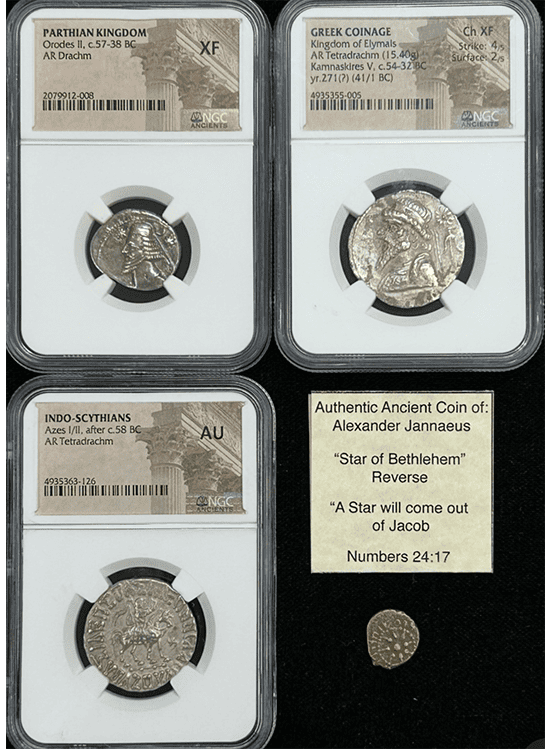
Around 50 BC, three silver coins left the mints of the Parthian Kingdom, Elymais, and the realm of King Azes. Decades later they still passed from hand to hand along the caravan roads of the Near East, the same roads the Magi traveled when they followed a star to Bethlehem.
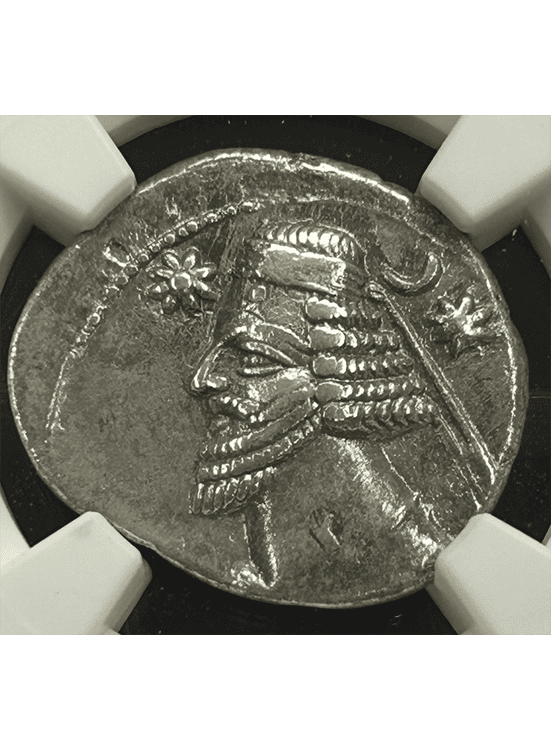
The first is a drachm of Orodes II (c. 57–38 BC). The Parthian king faces left, a star before his brow and a crescent behind his head. Parthian monarchs styled themselves brothers of the sun and moon. Their Magi, hereditary priest-astronomers of Median origin, read the heavens for the court. Early Christian writers identified Matthew’s Wisemen as Persians of this Parthian world.
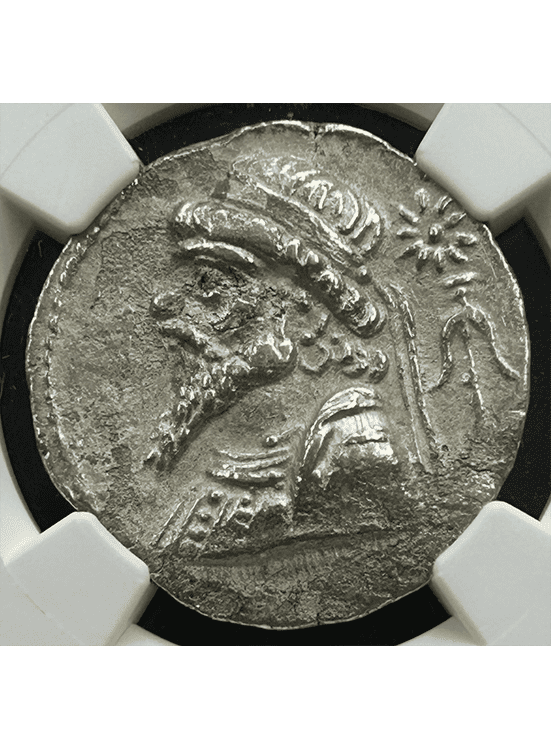
The second is a tetradrachm of Kamnaskires V of Elymais (c. 54–32 BC). Behind the king’s diademed bust a star stands above the distinctive Elymaean anchor. Elymais occupied ancient Elam in southwestern Iran, a land named in Scripture and long home to priestly sky-watchers. Its heavy silver moved freely through Parthian markets.
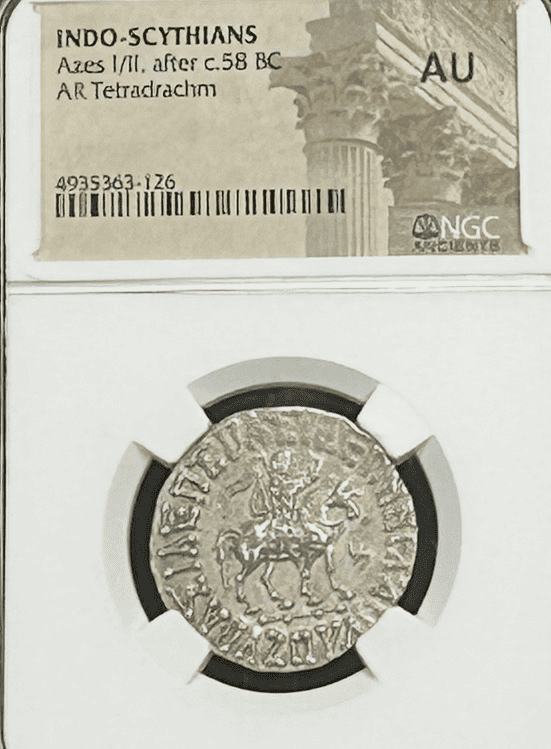
The third is a tetradrachm of the Indo-Scythian king Azes I/II (after c. 58 BC). The king rides right, whip in hand, Greek and Kharoshthi legends circling a realm that reached toward India. Later tradition named one of the three kings Caspar of India; Azes’ silver was the currency of that eastern corridor.
These pieces could have jingled in the purses that paid for camels, lodging, and gifts of gold, frankincense, and myrrh. The stars and crescents on the Parthian and Elymaean coins are not mere ornament. They testify that these courts watched the sky with trained eyes, the same skill that let the Wisemen recognize “his star in the east” (Matthew 2:2).
That expectation did not arise in a vacuum. Six centuries earlier, during the Jewish exile in Babylon, Daniel was set over the wise men of the empire (Daniel 2:48; 5:11). Tradition holds that he became chief of the Magi and left them the Scriptures: Balaam’s oracle that “a star shall come out of Jacob, and a scepter shall rise out of Israel” (Numbers 24:17), and his own vision of seventy weeks pointing toward a coming king. When a remarkable celestial sign appeared, men formed by that inheritance set out from the East bearing gifts for the new born King of the Jews